Tampilkan postingan dengan label the. Tampilkan semua postingan

The presence of Intel Core i3 Ivy Bridge

Minggu, 23 Oktober 2016

Intel Core i3
First third-generation Intel Core i or Ivy Bridge only provide i7 and i5 series. The launch of this processor was greeted with the presence of a variety of notebooks with processors Ivy Bridge and all the pitfalls in the marketplace for consumers is the issue price is not affordable by most consumers.
The presence of Intel Core i3 is the answer for consumers who want a notebook processor with Ivy Bridge i3 series.

Since the presence of these Intel Core i3, followed also launched a variety of notebooks with this processor and the notebook is used on Intel Core and Intel Core i3 i3 3217U 3110M. Notebooks that use these processors already use: Dual Core, Intel HD 4000 Graphics, 22nm and Hyper Threading.

Intel Core i3 Ivy BridgeIntel Core i3 3217U is a type of Ultra Low Voltage processor that is installed or intended to type with speed generated Ultrabook 1.8GHz 3MB L3 cache, and uses Intels HD 4000 graphics and a lower clock a bit.

Intel Core i3 3110M is capable of producing a speed of 2.4GHz 3MB L3 cache, and uses Intels HD 4000 graphics that support Hyper Threading. These processors aimed at mainstream type notebook.

Notebook with Intel Core i3 notebook this may make it more affordable prices for middle-class market share.
For those of you who want to know about the performance of Intel Core i3, i5 and i7 you can see on this web page from different brands.

4.5
Read More..

Another Day in the Life Teaching in Sarajevo Bosnia

Rabu, 18 Februari 2015

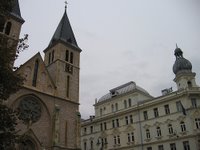
In the next in our occasional series Another Day in the Life of …, Katie writes about teaching in Sarajevo, where she previously lived.


I wake up at 9:30 and walk to the bakery five minutes from my door. I pay 25 cents for a buhtla cokoladna – a warm roll with chocolate inside that I buy regularly but can never pronounce correctly. Back at home, I watch an old episode of Oprah, which, as with all television programs in Sarajevo, is in its original language with local language subtitles.

I leave my flat at 11, stopping by the Internet cafĂ© to check email – there are two computers with Internet at the school, but they are ancient and slow and often busy with eight teachers there at the same time. I take a shortcut through the vegetable market and when I arrive at the school, I make photocopies and short notes for my one-to-one lesson. Another teacher and I head across the street for lunch, the main meal of the day. The classes run from 5 to 9:40, so dinner will be yogurt and fruit at my desk during the twenty-minute break between classes.The one-to-one lesson goes smoothly. I work with a law student and she’s chosen to go through the nuts and bolts of grammar with a local teacher and to have “just” conversation with me. After nearly a year, it gets challenging to come up with innovative ideas and topics to talk about, but today we both take a personality test and it goes over well.

After this lesson, I have about two hours to prepare for four hours of classes. I’ve taught the same lessons before, so I can get ready quickly, but for new lessons, I would probably need most of that time: to decide what order to do things in, find supplementary material like games or songs, and make sure I can present and explain the grammar points well. I run out the door to buy my dinner at 4:45.

My first class is an elementary class. I can speak enough of the local language to translate if I need to, but I avoid that. The book is set up so that translation shouldn’t be necessary, and the students signed up for the course knowing they would be “forced” to communicate in English with a native speaker. Occasionally we have trouble with instructions, but we always figure it out somehow. I like this level because students can see their own progress easily after each class.

My next class is upper-intermediate. Most of the students are teenagers and I ask how they spent their weekend, killing time while the late ones trail in. Only a few have done their homework, so we spend ten minutes working on that and then check answers together. Whispered conversations are not infrequent; sometimes I interrupt them by calling on one of the chatters, sometimes I just ignore them.

After classes end, I record what I covered in the register and two other teachers and I decide to go out for a beer. We head down the street to the noisy, smoky and dark pub. We order cheap beer, gossip about students a bit, and try to come up with something fun to do on the weekend. At 11 I say good-bye because the trams stop running at 11:30 and at this point I’m too tired to walk all the way home.

You can read more of Katie’s articles if you check out the TEFL Logue – perhaps the best source on the Net for up-to-date information and news about the EFL world.


Acknowledgement

Photo provided under Creative Commons Licence by damselinredr via
flickr
Read More..

Making the Most of Your Coursebook

Kamis, 12 Februari 2015

The dialogues and texts used in EFL coursebooks are generally there to develop listening and reading skills. But they also contain a lot of language that the students could usefully “notice”, and this potential is often under-exploited. After the initial use of the text for comprehension, how can you recycle the texts and use them to develop the students general linguistic competence?

If you want to take a published text and adapt it in some way, you obviously face the issue of copyright. However, some publishers now accept that teachers need to adapt materials in order to make them fully appropriate for their students and their own teaching style, and waive copyright for certain portions of the book. An example is Oxford University Press which, on its website, publishes the tapescripts of some of its courses (Headway and International Express for example) in Word format, so that teachers can copy and adapt them. For the series Business Focus, there is also an extremely useful and flexible cloze maker, which can be used either for the texts in the book, or for the teacher’s own texts.

I like to bring texts back three or four times during the course, so that the language they contain is constantly recycled. They can be given to the students as a homework exercise, used as fillers at the start of the lesson while you’re waiting for latecomers, or at the end if your planned activities finish five minutes early. The types of activity you can use include :
  • Scrambled texts. Give the students the paragraphs or sentences of the text in random order, and ask them to reconstitute the text. They may be cut up on separate strips of paper so that the students have to physically rearrange them on the desk (as ever, if you back them on card they’re more likely to be re-usable with a later class), or simply printed on a sheet of paper with a box next to each one where the students can write the appropriate number. If you use this activity you need to be sure that there are sufficient clues to make the activity possible. These will often be cohesive clues – linguistic connections between parts of the text, such as pronouns referring back to a previous noun How was your trip? / It was fine thanks or demonstratives and synonyms with the same reference function : At the moment there is the danger that the disease will reach pandemic proportions. This risk is made more serious by … And/Or there may be clues of coherence, logical relationships between parts of the text. The sequence How are you? / Fine, thanks. is coherent, whereas How are you? / At 10.15 is not. Be careful – these links do not always exist in a text and/or there may be more than one possible answer. When preparing the activity, check for this and if there’s a potential problem write the number of the problem sentence or paragraph next to it, so that students know where to put it in the text.

  • Scrambled sentences. Alternatively, the sentences can be given in order, but the words of each sentence jumbled. This is a useful activity if your students have problems with word order in English.

  • Gapped texts. There are various ways you can gap a text, from strict cloze technique (systematically taking out every fifth, seventh or ninth etc word) to more focused gapping – for example, removing all the prepositions or simply choosing the words which you feel it would be useful for the students to focus on. Obviously, this should not be a memory test : it must be possible to deduce the necessary word from the surrounding context, as in Can you pick ….. that piece of paper please? where the only possibility is up. Where there is more than one possibility, or simply to make the activity easier, the correct words can be given in jumbled order in a box at the top of the exercise, or the first letter of the word can be given: Can you g…………. me a hand with these boxes? The OUP cloze maker allows you all these options.

  • Use the correct form. This is also a variant of a gapped text. It’s most commonly used with verbs – the verb is taken out of the sentence and the infinitive given in brackets (or, this time to make it harder, in scrambled order before the exercise) : I …… (go) to Spain last August. It can also be used, however, for other word classes – for example for comparatives and superlatives Barcelona is the ………………… (beautiful) city I know. or to focus on prefixes and suffixes He was fired because his work was ………… (satisfaction)

  • Spot the Mistake. Again there are several variations of this activity. You can :
    · Insert a certain number of mistakes into the text, for example : Did you have a good travel? As before, the mistakes can be focused (verb forms, prepositions, spelling etc) or mixed, focusing on the words you want the students to notice. It helps if you tell the students how many mistakes they have to find – one per line, or eight in the whole text, for instance.
    · Give alternative words : Did you have a good trip/travel? / Barcelona is the most/more beautiful city I know. The students have to choose the correct alternative.
    · Add an extra word into each line of the text : I went to Spain the last August or, alternatively, omit one word from each line : I have to go to office. Again, the words you choose to add or omit will reflect the problems which you know your students have, and which you want them to focus on. This type of personalisation is the reason why this type of exercise can best be designed by the teacher rather than the coursebook writer.


  • Rewrite the text. The students are given a version of the text almost but not quite like the original and have to rewrite it. For example, at beginner’s level they might have a version using full forms of the verb BE. They have to rewrite it putting the contractions back in wherever possible.

All of these activities have the advantage that the students can self-correct by looking back at the original text, which as I argued in Correcting Written Work : Encouraging "Noticing" often pushes them into a deeper form of cognitive processing than just having their work corrected. However, there are other variations which need a teacher’s confirmation. For example, if two three possibilities were given in Spot the Mistake, two of which were correct and one wrong : Did you have a good trip/travel/journey? The students would be able to find one of the correct alternatives in the original dialogue, but would need help for the second. The same would happen if there were more than one possible answer in a gapped passage : Can you ……… me a hand with these boxes? The original text might use give, but lend would be equally possible. Or if students at higher levels were given an informal version of a business letter they had already studied and had to convert it back to formal style. There might well be more than one acceptable alternative for each phrase.

But won’t the students get bored with working on the same text all the time? Not if the activities are varied, increase in level of difficulty each time, and the recycling is mixed in with other, newer work. In fact, very often they may not even remember having seen the text before. This is a sign that their processing of the text has not gone very deep – however often you’ve recycled it. One way to increase the “depth” of this processing is to ask them to create the exercise to be used with the text themselves. Once students are familiar with the exercise types that can be used, distribute a different previously studied text to each person. List a number of exercise types on the board, check that the students remember them, and ask them to choose one to apply to their text. For homework, they create the exercise and in the next lesson swap exercises and do the activity which another student has created.


Acknowledgement


Photo provided under Creative Commons Licence by Red Lioness via flickr

Read More..